We are committed to providing excellent cutting tools
Focus on quality and service

We are committed to providing excellent cutting tools
Focus on quality and service
We are committed to providing excellent cutting tools
Focus on quality and service
We are committed to providing excellent cutting tools
Focus on quality and service
We are committed to providing excellent cutting tools
Focus on quality and service
Focus on quality and service
We are committed to providing excellent cutting tools
Focus on quality and service
Focus on quality and service
What are the types of characteristics of holemaking tools?
Published:
2022-12-29 16:45
Drilling tools can be divided into drilling tools, boring tools, reaming tools and reaming tools.
(1) There are many drilling tools, mainly ordinary twist drills, indexable shallow hole drills and flat drills. Ordinary twist drills are usually used for drilling with machining centers, which are mainly composed of working parts and shanks. The tool shank part is straight shank and taper shank. The shank of the straight handle tool is mainly the spring chuck shank, which has the advantages of automatic centering and automatic elimination of deflection, so it is best to use this type of small size tool. The working part includes a cutting part and a guide part, as shown, the cutting part of the twist drill has 2 main cutting edges, 2 secondary cutting edges, and 1 horizontal edge. The guide part of the twist drill plays the role of guiding, polishing and chip removal and conveying cutting fluid. Twist drill is generally used for rough machining of holes with low precision, because the fixture used in the machining center does not have a drilling sleeve centering guide, the drill bit is prone to deflection movement when rotating and cutting at high speed, and the horizontal edge of the drill bit is long, so when drilling, the center hole should be drilled with the center to correct the drill bit.
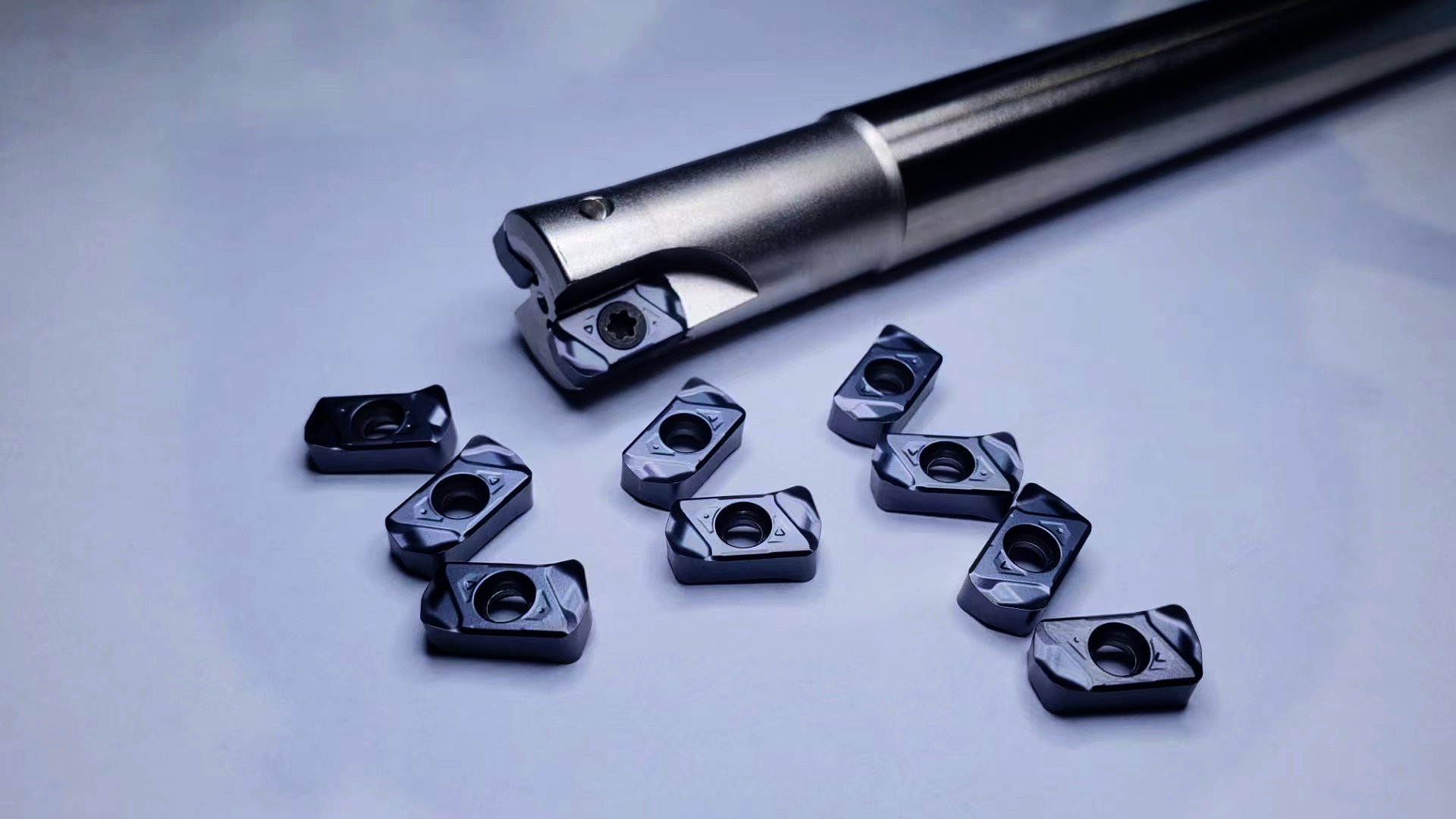
(2) The main feature of boring is to obtain the exact position size of the hole, and obtain high-precision roundness, cylindricality and surface roughness, so the hole with high precision can be guaranteed by a boring tool. Boring tools can be divided into single-edged boring tools and double-edged boring knives according to the number of cutting edges, and boring through holes, blind holes, and step holes can be completed by single-edged boring tools; When machining large diameter holes, double-edged boring tools can be used. In addition, there is a kind of fine adjustment boring tool, in the machining center is currently more often selected fine boring tool for hole fine boring, this boring tool adjustment is convenient and high precision.
(3) The machining center mostly uses reaming drilling for reaming, and there are also reaming tools for reaming, such as when the reaming diameter is small, you can choose a straight handle reaming knife; When the reaming diameter is medium, a tapered shank reamer knife can be selected; When the reaming diameter is large, a sleeve reamer knife can be used. In addition, keyway milling cutters or end mills can be used for reaming, which is more accurate than controlled machining with ordinary reaming drills. Because the end mill has cutting edges on the cylindrical surface and end face, it can be cut at the same time or separately, and the tool in the machining center can be fed axially or laterally like a horizontal milling machine. Therefore, the screw interpolation command is used on the machining center, and the end mill is used to ream, and only one tool can complete the machining of multiple different apertures.
(4) Reaming holes are generally in the final stage of processing, and most of them are used for the finishing of holes with a diameter less than Φ25mm. Because the number of teeth of the reaming hole is large, the guidance is good, the chip groove is shallow, and the rigidity is good, the dimensional accuracy of the hole after processing can reach IT7~IT9 level, and the surface roughness can reach Ra1.6~0.8μm. There are three types of ordinary standard reamers: straight handle, taper shank and sleeve. The diameter of the small hole straight shank reamer is 16mm, the diameter of the straight shank is 6~20mm, the diameter of the taper shank reamer is 10~32mm, and the diameter of the sleeve reamer is 25~80mm, which can be selected according to the needs of processing.
Prev
Hot News
CONTACT US
Address: No. 70, Zone D, Lixingzhijia, Chuangxin Avenue, Chongzhou, Sichuan
E-Mail:info@youcuttools.com
Tel:+86 028-60490486
Phone:+86 13540825538
Zip:611230
QR code of official website